SELF-IMPROVING VISION-LANGUAGE-ACTION MODELS WITH DATA GENERATION VIA RESIDUAL RL
论文的三那个阶段都展示在以下的algo中
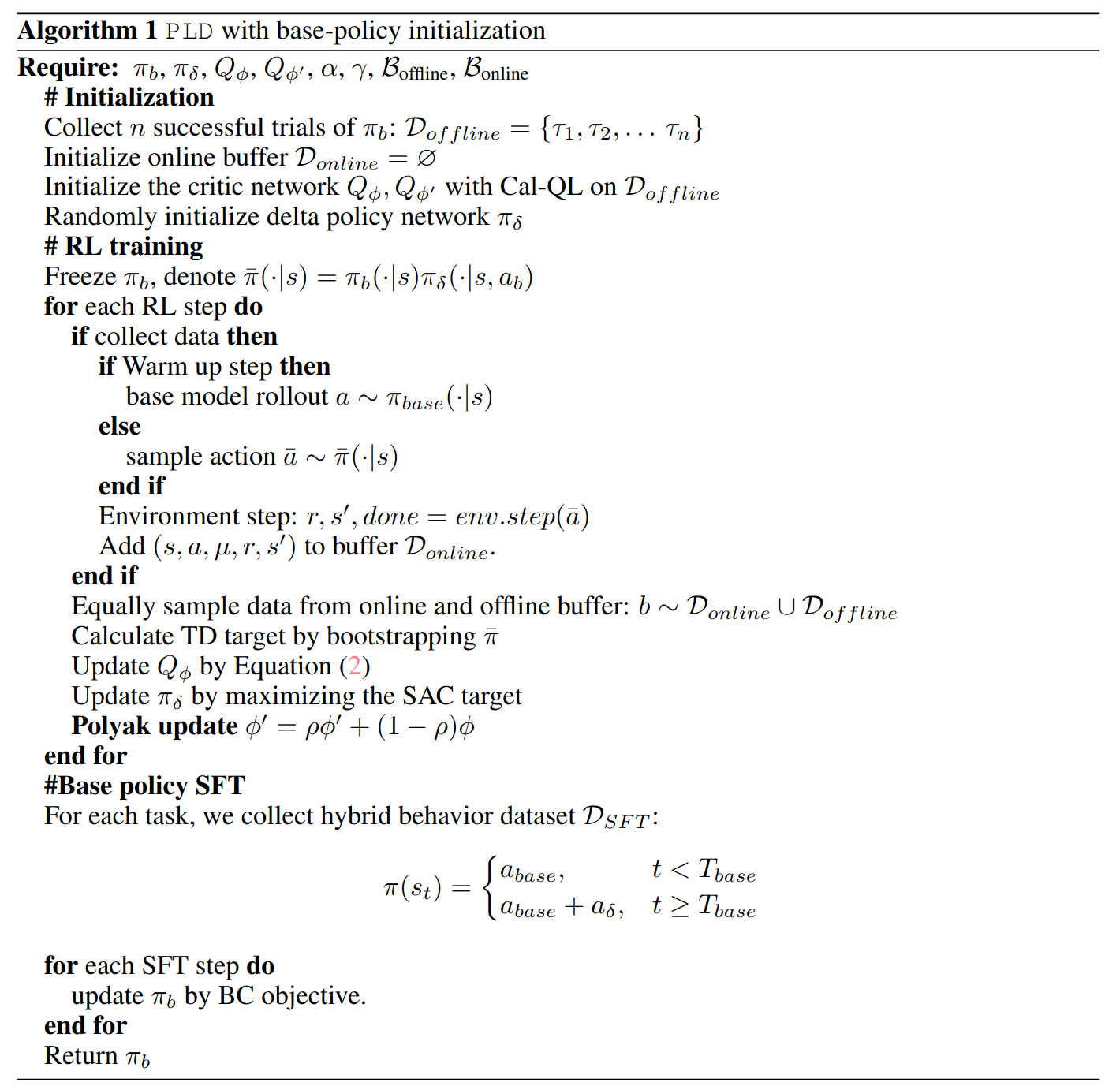 需要注意的点是environment step返回的reward,real world考虑训练一个binary reward classifier:输入是相机图像和 proprioception,输出当前状态是否成功。论文 appendix 里说:
- 每个任务训练一个独立 classifier
- 数据是小规模 success/failure states
- 模型结构是 pretrained ResNet-10 + 3-layer MLP
- 还用 augmented false-positive samples 训练到约 99% success-rate
- GPU 插拔长程任务里,reward classifier 还用于控制 stage/state machine 的切换
Notes
reward是0,1分布的,需要训练一个binary classifier,它的输入就是policy的输入(不包含prompt)。但是这里可能有一个问题是,如果supervised训练,标注从哪里来呢? DeepSeek通读论文后给出了一个我认为还可以的理解:
- pick up blue cube:方块是否已经被稳定抓起,离开桌面,并且目标物体正确。
- pick-and-place:物体是否在目标区域内,机器人是否释放或稳定放置。
- peg insertion:peg 是否插入孔中到足够深度,姿态是否正确。
- drawer opening:抽屉是否打开到目标程度。
- GPU insertion:是否完成当前子阶段,比如插入 slot 1、移到 slot 3、稳固插入等。 人标的不是“这一步动作好不好”,而是“这个状态是否已经算完成任务”。
My concern
作者其实也有比较long-horizon tasks,但是得出的结论是:the fine-tuning of the data PLD exceeds the tuning of the data from the baseline policy roll-out (self-bootstrapped), but still falls short of the performance achieved with demonstrations by human experts 因此从这个角度看,简单的RL进行修正并不能完全解决问题,且DAgger还是针对long-horizon任务的一个非常有效的数据采集手段。