ROSA: Harnessing Robot States for Vision-Language and Action Alignment
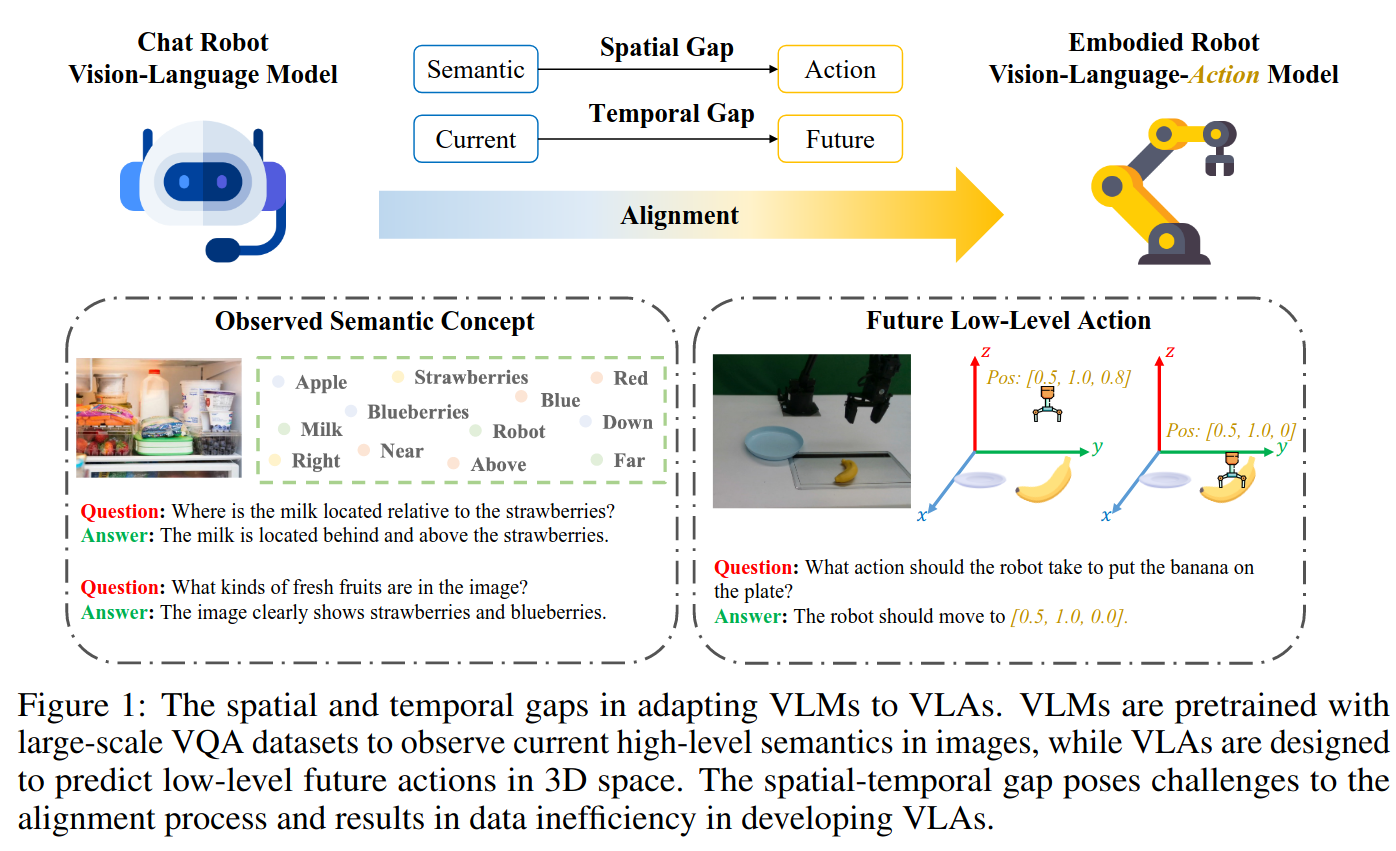
这篇文章感觉也是挺有趣的,他们的一大动机是发现从VLM到VLA存在空间上(即语言、图片到action的语义不同)和时间上(预测未来)的gap:
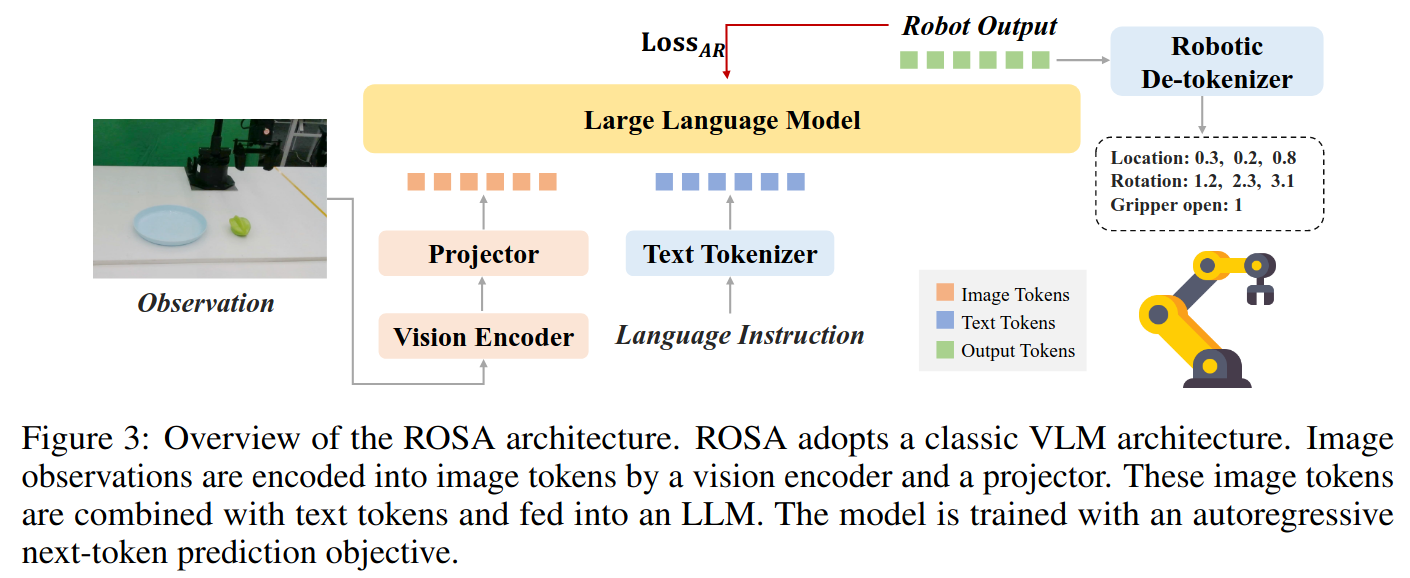
 那么作者的解决方案是引入“state estimation”这个补充目标进行训练的:
 这里会有很多的问题:
- 作者的框架还是基于OpenVLA一套的,没有额外的action expert,其实我个人认为diffusion/flow matching本身就在尝试解决temporal gap。作者没有添加action expert其实也是希望input-output是统一起来的,即在不改变网络结构的前提下也可以同时训练next-action + current state estimation
- 最奇怪的一点还是在作者并没有将state作为predict next action的输入,这就十分奇怪了,因为明明它是比较容易获取的data。只能说为了“预测state”作者舍弃了很多。
Takeaway
Using larger amounts of state data degrades performance, likely due to distributional shifts that impair the model’s ability to predict future actions